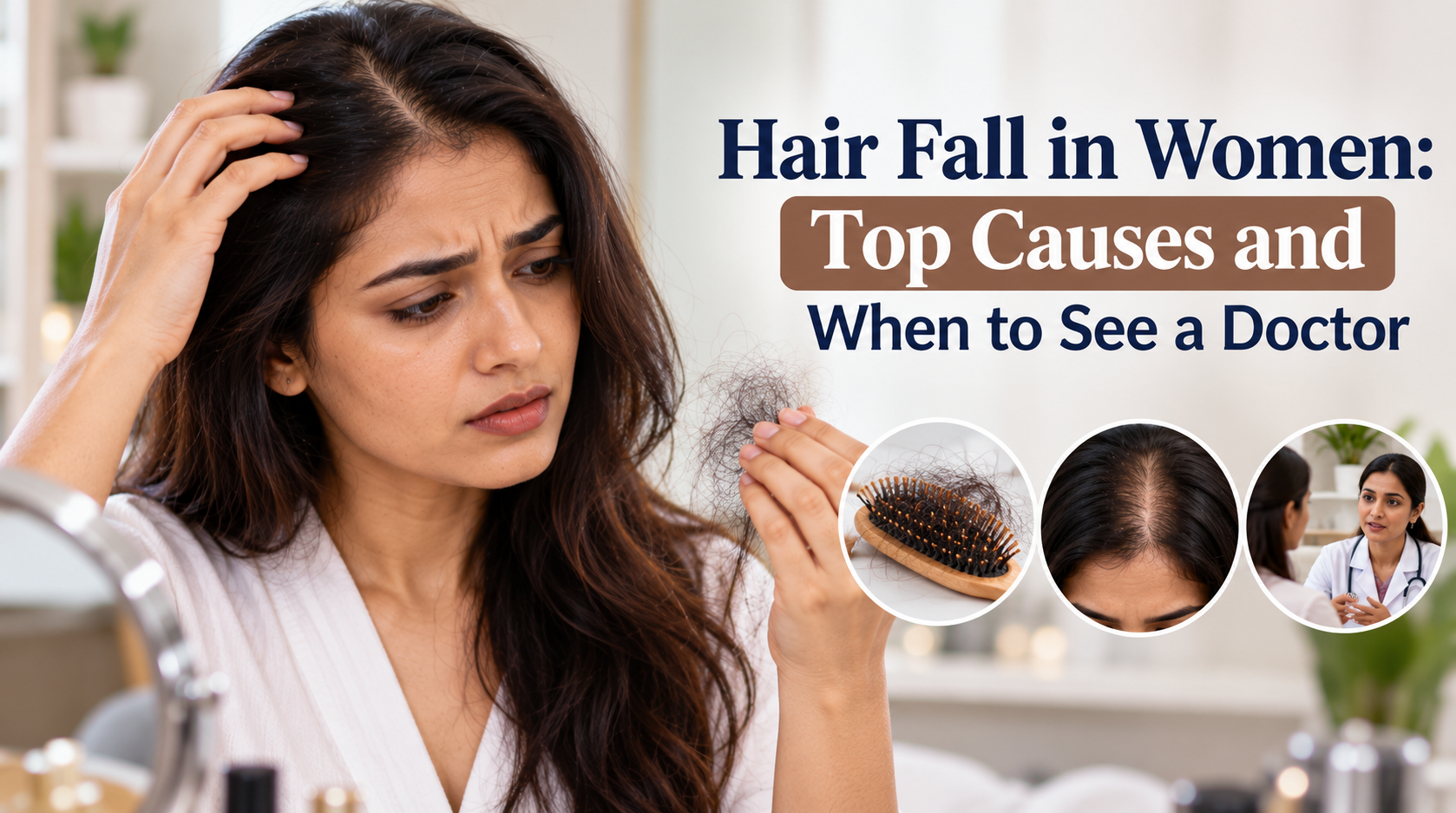
Hair fall can be frustrating, especially when you start noticing more hair on your pillow, in the shower or on your hairbrush. You may also notice that your ponytail feels thinner or your scalp is becoming more visible.
Hair fall in women can happen for many reasons. Hormonal changes, stress, nutritional deficiencies and certain scalp conditions can all play a role. The right treatment depends on what is causing the hair loss. If you are looking for hair fall treatment for women, it helps to understand the possible causes before trying new oils, supplements or hair treatments.
monitoring How much hair fall is normal?
It is normal to lose some hair every day as part of the natural hair growth cycle. Many people shed around 50 to 100 hairs a day, but the amount can vary. What matters is whether you notice a change from your usual pattern. Signs that something may have changed:
- arrow_right More hair falling out than usual for several weeks
- arrow_right A wider parting or a thinner ponytail
- arrow_right Hair loss around the temples or hairline
- arrow_right Visible patches of hair loss
- arrow_right A scalp that becomes more visible over time
- arrow_right Hair shedding after an illness or major life change
Hair shedding and hair thinning are not always the same. Shedding means more hairs are falling out, while thinning may happen slowly as hair becomes finer or fewer hairs grow back.
science 1. Hormonal changes
Hormones can affect the hair growth cycle at different stages of a woman’s life. Pregnancy and the months after childbirth, perimenopause, menopause, PCOS, thyroid disorders and changes in hormonal medication may all affect hair growth.
After childbirth, some women have increased shedding. This is often called postpartum hair loss. It commonly becomes noticeable a few months after delivery and may improve as the hair growth cycle settles.
PCOS can also contribute to hair thinning in some women because of higher androgen levels. If hair loss happens along with irregular periods, acne or increased facial hair, it is worth discussing these symptoms with a doctor.
psychology 2. Stress and sudden hair shedding
Physical or emotional stress can disturb the normal hair growth cycle. This can happen after a high fever, major illness, surgery, emotional stress or a period of rapid weight loss. This type of shedding is called telogen effluvium. It often causes hair to fall from across the scalp rather than in one small patch.
The shedding may begin a few months after the trigger. In many cases it improves once the body recovers, but it can take several months for hair fullness to return. If shedding continues, it is important to check for other causes too.
- check_circle Eat regular balanced meals.
- check_circle Avoid crash diets and sudden weight loss.
- check_circle Get enough sleep and allow time for recovery after illness.
- check_circle See a doctor if shedding is heavy or continues.
Hair oils and scalp massages may help with hair care, but they do not correct every cause of hair shedding.
nutrition 3. Iron deficiency and poor nutrition
Your hair needs enough nutrients to grow. When your diet does not provide enough energy, protein or certain vitamins and minerals, hair shedding may increase. Iron deficiency is an important cause to consider in women who have heavy periods, follow restrictive diets or have other reasons for low iron levels.
Low protein intake can also affect hair growth. This may happen when you skip meals regularly or follow a very restrictive weight loss plan.
If hair fall continues along with tiredness, it may be worth checking for low iron levels or a thyroid problem. If the shedding is persistent or has no clear cause, see a doctor to find out what is behind it and whether any tests are needed.
Do not start iron tablets or high dose hair supplements without knowing whether you need them. Too much of some nutrients can cause harm. A doctor can advise whether blood tests are appropriate.
monitor_heart 4. Thyroid problems
The thyroid gland helps control several important body functions. When it is underactive or overactive, you may notice changes in your hair. Some women have diffuse thinning or increased shedding. Other symptoms may include unusual tiredness, changes in weight, feeling colder or warmer than usual and changes in menstrual periods.
These symptoms can have other causes too, so they do not confirm a thyroid problem on their own. If hair fall happens along with other unexplained changes, speak with your doctor. A thyroid blood test may be recommended depending on your symptoms and medical history.
trending_down 5. Female pattern hair loss
Female pattern hair loss is a common cause of gradual thinning in women. It can run in families and may become more noticeable with age. Unlike sudden shedding, this type of hair loss often develops slowly.
- arrow_right A wider parting
- arrow_right Less volume at the crown
- arrow_right A thinner ponytail
- arrow_right More scalp showing through the hair
It does not usually cause complete baldness. However, it can progress over time. A dermatologist may discuss options such as topical minoxidil depending on your health and circumstances. If you are pregnant, planning a pregnancy or breastfeeding, talk to your doctor about safety before starting any hair loss medicine.
content_cut 6. Hair styling and scalp problems
Frequent tight ponytails, braids or buns can pull on the roots. Over time this may lead to traction alopecia. Repeated chemical straightening, bleaching and too much heat can also damage the hair shaft and cause breakage.
Scalp conditions can cause hair loss as well. Persistent itching, scaling, redness or painful patches should not be ignored.
- check_circle Avoid hairstyles that pull tightly on your scalp.
- check_circle Use a gentle shampoo and conditioner.
- check_circle Reduce frequent heat styling and harsh chemical treatments.
- check_circle Avoid scratching or picking an irritated scalp.
- check_circle See a doctor for persistent scalp symptoms or bald patches.
If the hair is breaking along its length, the issue may be hair damage rather than shedding from the root. A proper check helps tell the difference.
troubleshoot How is the cause of hair fall found?
There is no single test that explains every case of hair loss. The first step is understanding when it started and how it has changed. A doctor may ask about your periods, pregnancy history, recent illness, diet, medicines and family history.
They may examine your scalp and hair growth pattern. Depending on what they find, they may suggest blood tests to check for issues such as iron deficiency or thyroid problems. The aim is not to order every possible test. It is to choose the tests that make sense for your symptoms.
medical_information What treatment options exist for hair fall in women?
The right treatment depends on the cause. What helps one woman may not help another.
- arrow_right Iron or other nutritional deficiency: correcting the deficiency with medical guidance.
- arrow_right Thyroid problems: treating the underlying condition.
- arrow_right Stress related shedding: it may improve as stress eases and the body recovers.
- arrow_right Female pattern hair loss: options such as minoxidil may be discussed with a doctor.
- arrow_right Scalp infection or inflammation: needs specific treatment.
- arrow_right Hair damage: avoid tight hairstyles, excess heat and harsh chemical treatments.
Procedures such as platelet rich plasma (PRP) are also used for some types of hair loss. Evidence suggests PRP may help selected patients, but results vary from person to person. It is not a replacement for finding the cause. Your doctor can tell you if it is suitable for you.
Hair treatments often need several months before any change can be judged. Be careful with products that promise instant regrowth or guaranteed results.
medical_services When should you see a doctor?
Consider seeing a qualified dermatologist if you notice sudden heavy shedding, clear bald patches, scalp pain or redness, or hair loss that keeps getting worse. It is also worth seeking advice if you have tried home remedies for months without change.
Before choosing any clinic for hair loss, you can ask these questions:
- help Who will examine my hair and scalp, and what are their qualifications?
- help What is the likely cause of my hair fall?
- help What does the proposed treatment involve, and what are the risks and limits?
- help What is the fee, and how will progress be reviewed?
checklist Conclusion
Hair fall in women can have several causes, and sometimes more than one factor is involved. Hormonal changes, stress, nutrition, thyroid problems and inherited hair thinning are all worth considering. Instead of trying several products at once, start by noticing when the hair fall began and whether anything changed around that time. A proper check can help you avoid unnecessary treatments. It is useful to understand why your hair is falling before deciding how to treat it.
quiz Frequently asked questions
What is the most common cause of hair fall in women?
Female pattern hair loss is a common cause of gradual thinning. Sudden shedding may have other causes, including illness, stress, childbirth or nutritional deficiencies.
Can stress cause hair fall in women?
Yes. Significant physical or emotional stress can trigger temporary shedding. It often becomes noticeable a few months after the stressful event.
Which blood tests may be needed for hair fall?
Depending on your symptoms, a doctor may recommend tests for iron deficiency, thyroid problems or other possible causes. Not everyone needs the same tests.
Can hair grow back after hair fall?
In many cases it can. Hair may recover after temporary shedding once the cause has been addressed. Other types of hair loss may need ongoing care.
Are hair growth supplements necessary?
Not always. Supplements are most useful when a deficiency has been found. Taking high doses without medical advice may be harmful.
This article is for general health education only. It is not a substitute for medical advice, diagnosis or treatment. Speak with a qualified doctor about your own hair or scalp before starting any medicine, supplement or procedure.
Connect with the Clinical Team at WIORA Wellness
If you’re looking to learn more about your skin, hair, or wellness concerns, connect with the clinical team at WIORA Wellness. Book a consultation to discuss your concerns and explore personalised treatment options.
Someone booked our treatment
Just now